
Getting more life from a set of tires is a reasonable goal when researching Tesla suspension updates. But the parts selected to pursue that goal matter just as much as the alignment settings.
In June 2026, a 2022 Tesla Model Y Performance arrived at Connie & Dick’s Auto Service Center by AAA tow. Its aftermarket rear camber arms had been installed in an attempt to increase tire life. We found a hazardous condition: the driver-side arm was cracked and ready to break.
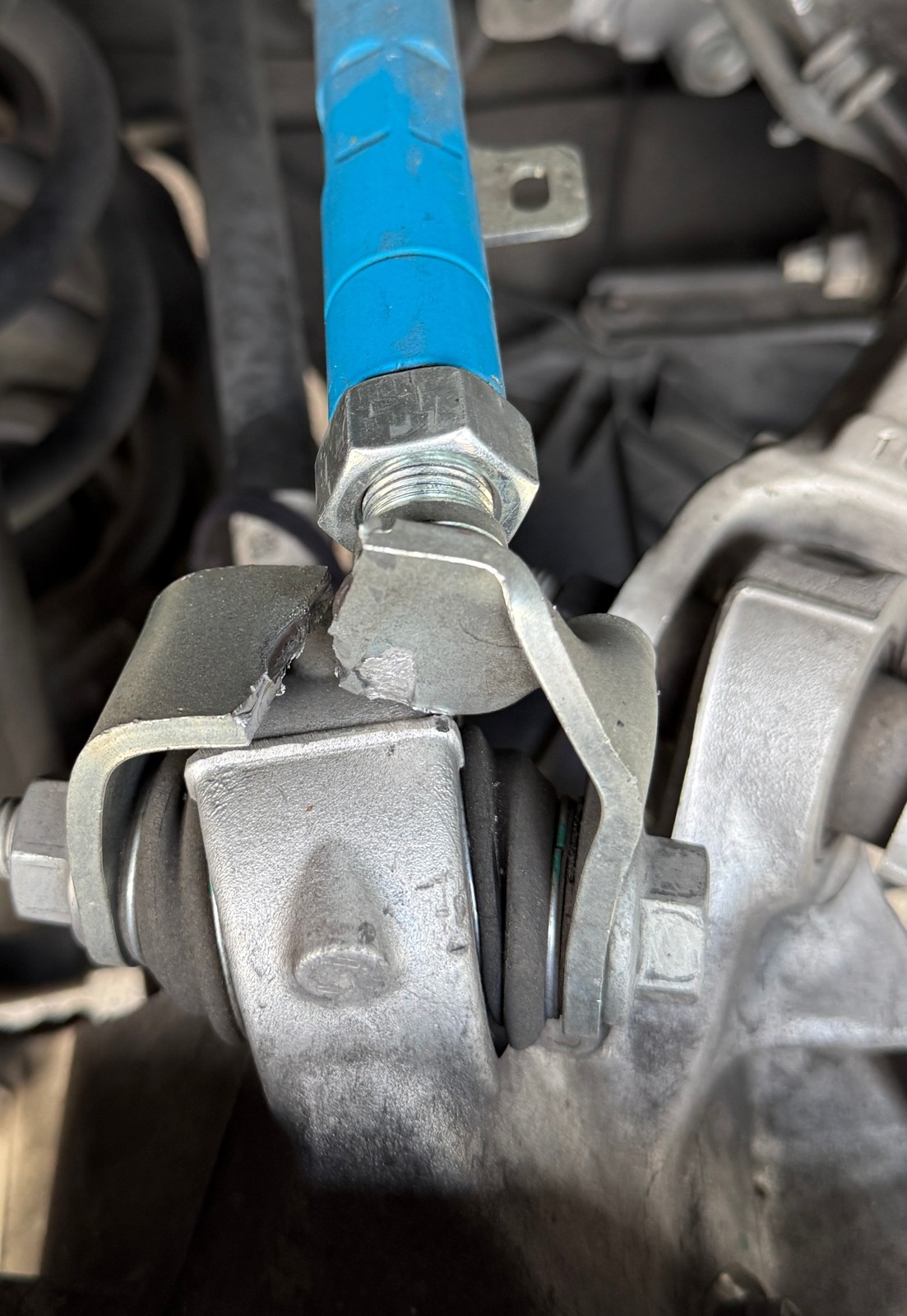
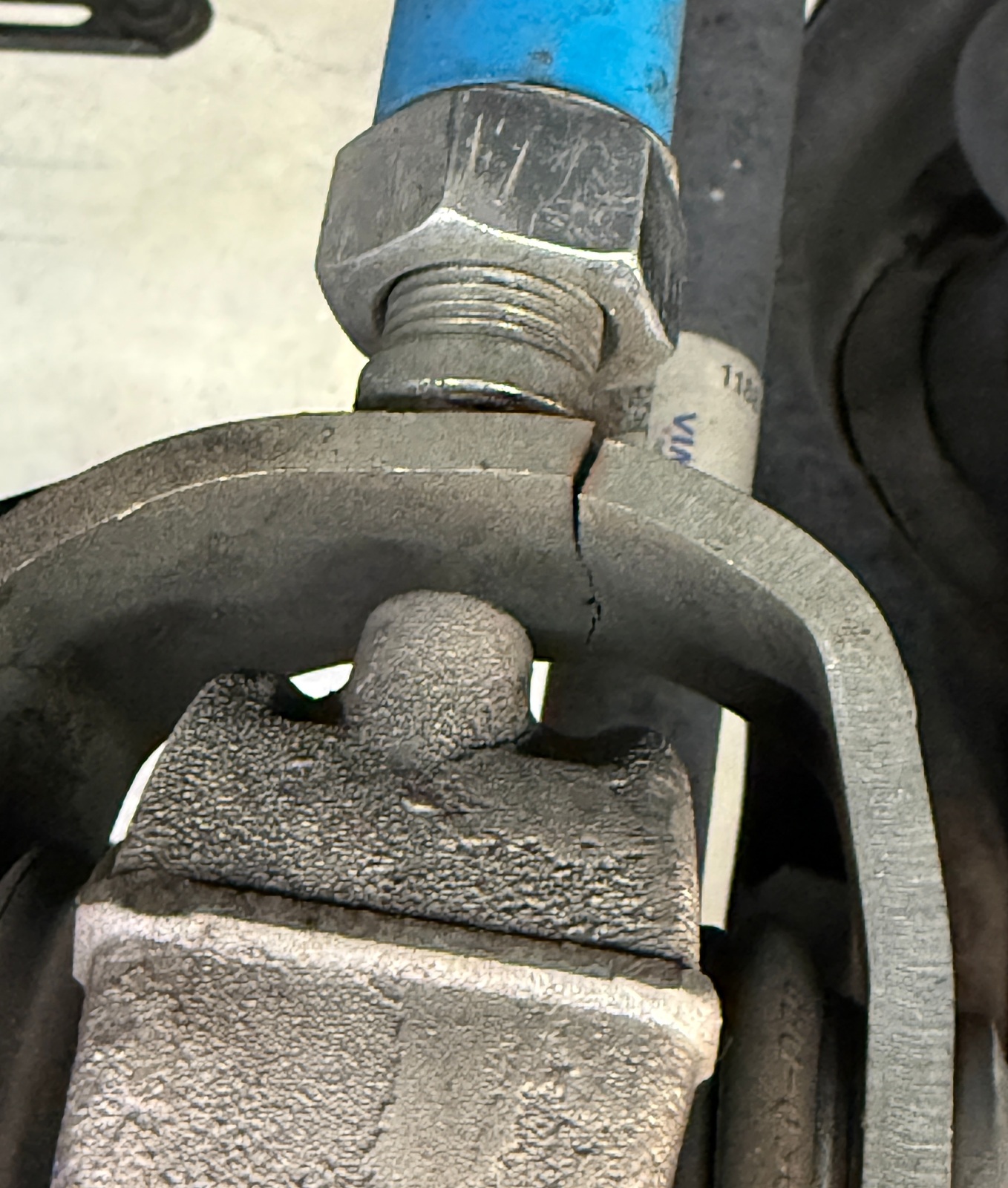
Our photos show cracks and separation at the blue arms’ forked mounting ends. In the inspection video, a hand rocks an installed arm and fractured sections move apart. Those observations document damage, not its original cause. We are not attributing the fracture to part quality alone.
The lesson is not to reject every aftermarket component. It is to understand the adjustment needed, select appropriate parts, and verify the work.
The wheel position and the warning screens
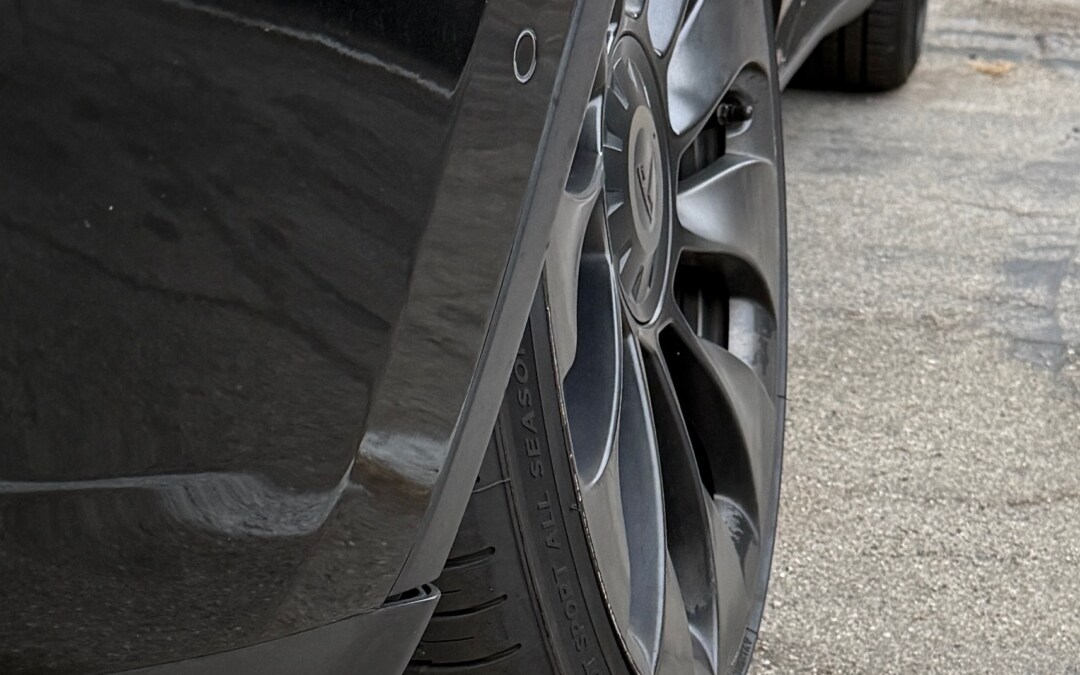
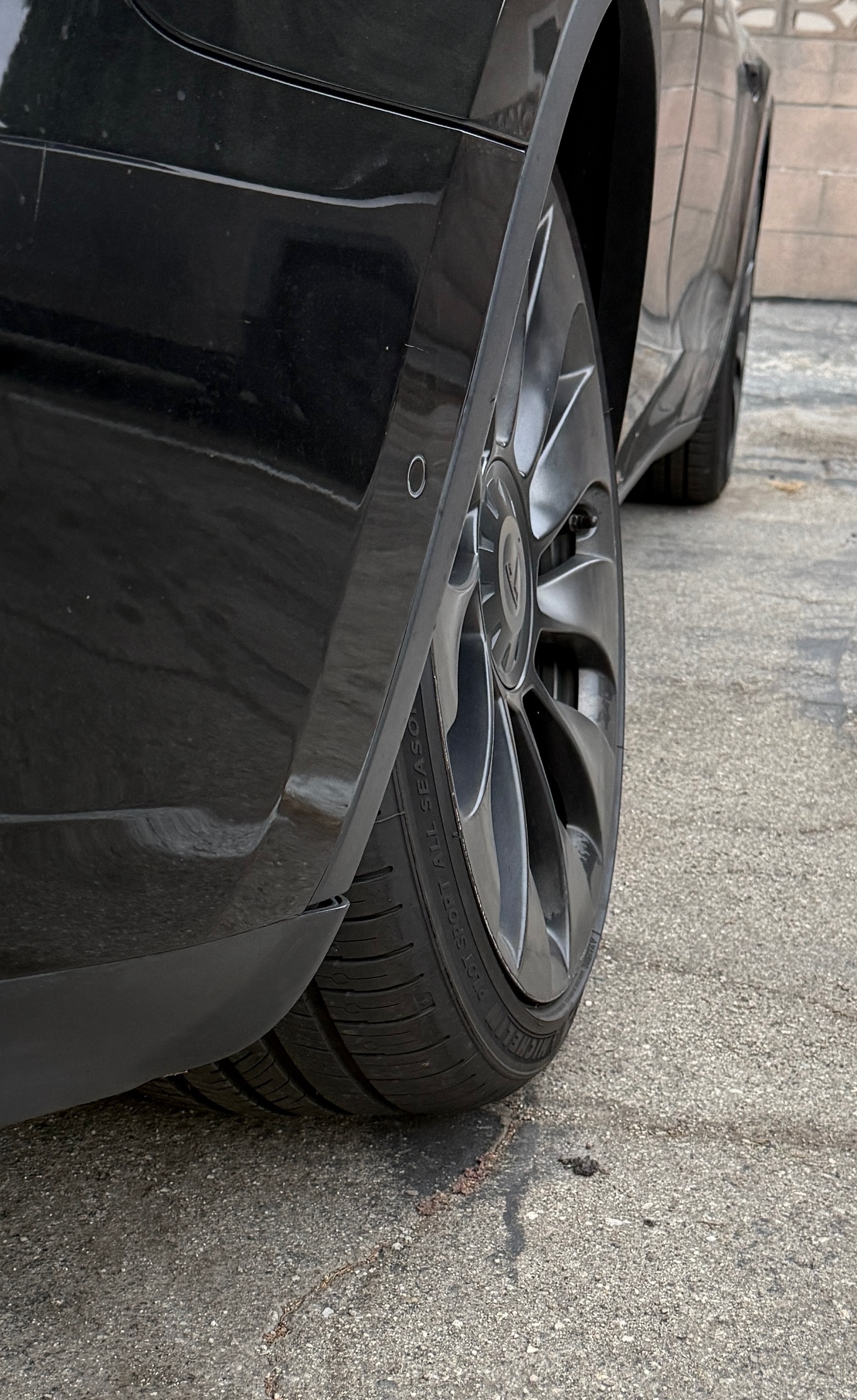
The right-rear wheel photo shows a pronounced inward lean. It is a useful view of the concern, not a measured camber angle. We considered the physical suspension findings alongside the vehicle’s diagnostic information.
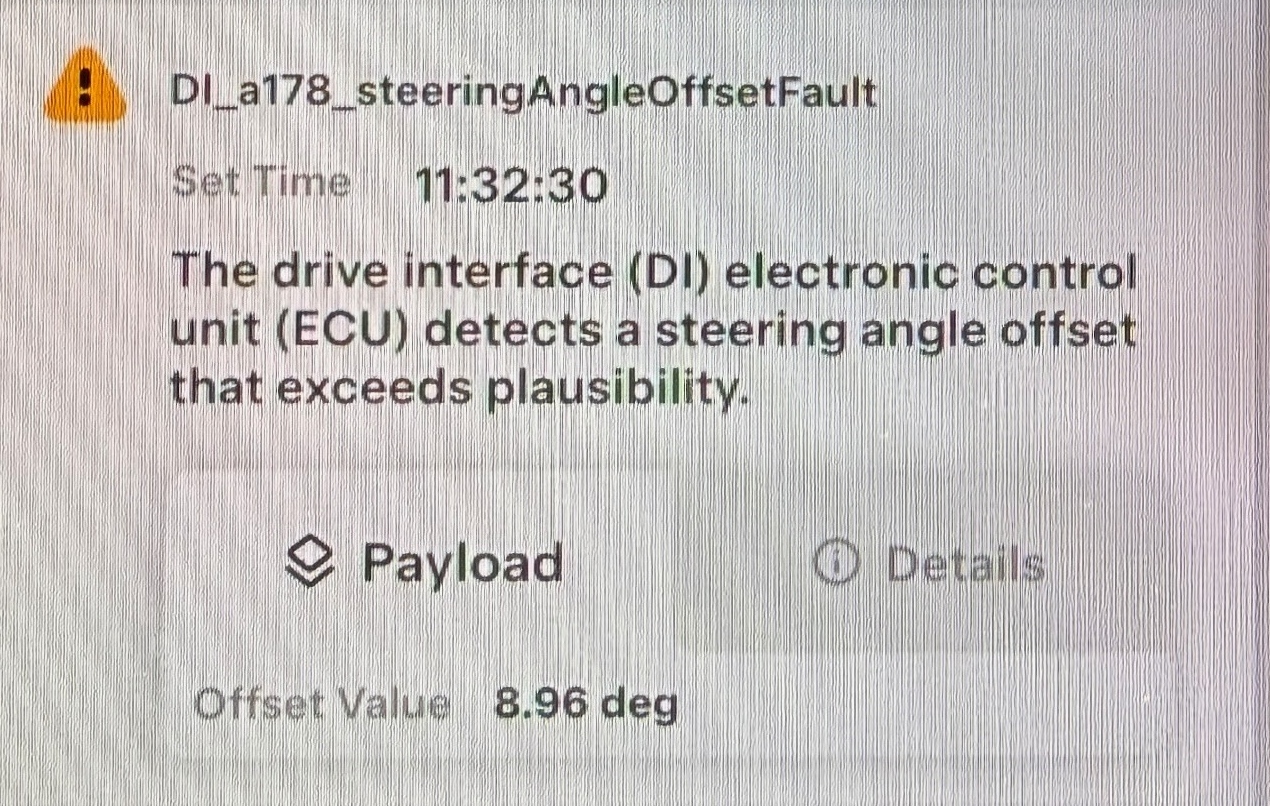
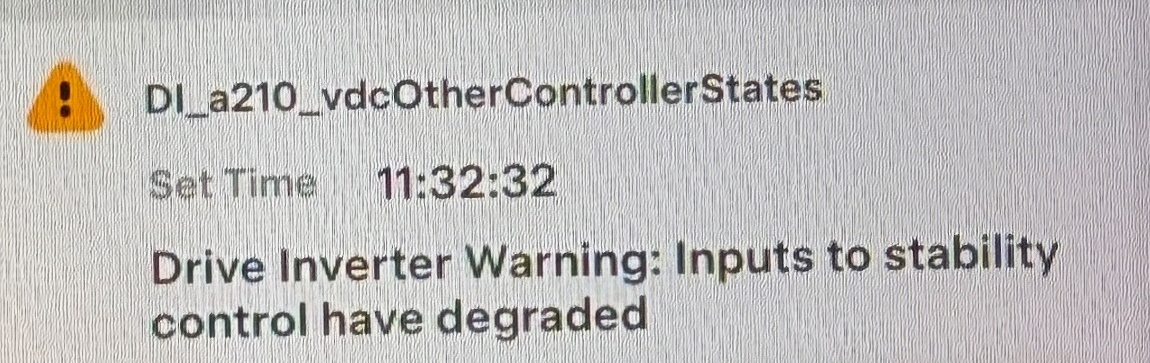
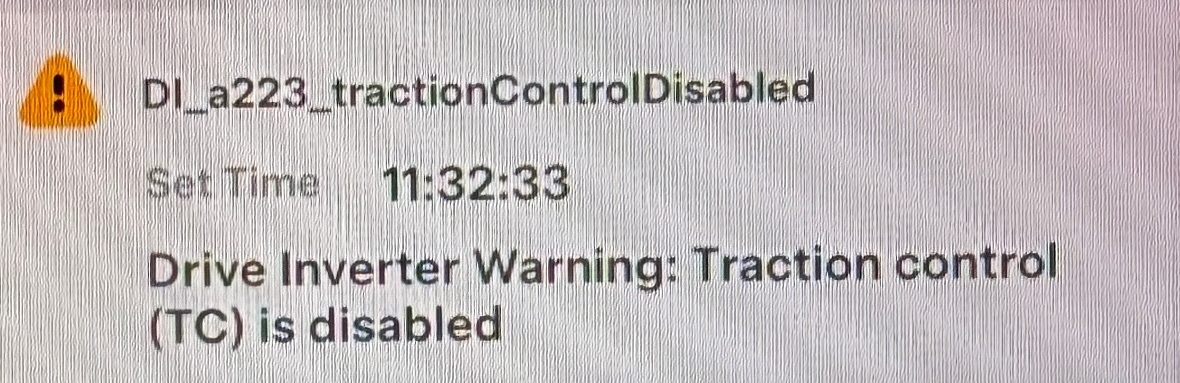
Inspection screens show a steering-angle-offset fault, degraded stability-control inputs, and a traction-control-disabled warning. One screen displays “Offset Value 8.96 deg.” That is a steering-angle diagnostic offset—not rear-wheel camber. These are inspection fault screens, not alignment measurements. They do not show electronic detection of a fractured arm, establish that the fracture caused the warnings, or prove the alerts cleared after repair.
Does Tesla provide rear camber adjustment on Model 3 and Model Y?
Camber is a wheel’s inward or outward tilt when viewed from the front or rear. Tesla’s Model 3 alignment procedure and Model Y alignment documentation explain that these vehicles do not have dedicated camber adjustment points.
That does not mean no factory adjustment is possible. Tesla describes using suspension “lash and slop”—repositioning components within available clearance at mounting connections. The Model 3 2024+ procedure and Model Y 2025+ procedure reviewed for this article retain that distinction.
A dedicated adjustable arm provides a different means of setting camber by changing the link’s effective length. Whether it is appropriate depends on the vehicle, suspension condition, ride height, and intended use—not simply its model name.
What we did on this Model Y
We replaced both rear camber arms with an Unplugged Performance Billet Adjustable Rear Camber Arm Set, part UP-M3MY-313-1.1. The documented work also included a four-wheel alignment, steering-angle calibration, and headlight aiming. Quality-control and road-test checks were recorded as completed, and the vehicle was picked up June 30.
The confirmed alignment session recorded rear camber at −1°13′ left and −1°21′ right, with individual rear toe at 0°12′ and 0°14′. Those rear readings were within the ranges displayed on that report. These are degrees and minutes, not decimal degrees.
Importantly, rear camber was also within the displayed range in that session’s “before” readings. The report is not a confirmed before-and-after test of the arm replacement, and it does not establish improved tire life. Right-front camber remained outside specification; additional front lower/compliance-arm work was recommended but not performed. The rear-arm repair did not resolve every suspension concern.
Why we choose quality aftermarket options
We have installed many Unplugged Performance camber arms on Model 3, Model Y, Model S, and Model X vehicles. In our firsthand shop experience, all of those installations remain in service without fault to date. That is our experience—not a universal reliability guarantee or a claim that one part fits every model.
Unplugged Performance is our trusted alternative here, not the failed component. Its Model Y technical description explains the adjustable-arm application, while its Model 3 V3 installation guide recommends alignment after installation. Exact fitment, product revision, instructions, hardware, and sensor provisions still need checking for each vehicle.
Rear camber and tire-life questions
Will adjustable camber arms make my tires last longer?
They can help address an alignment need, but they do not guarantee additional tire life. Toe, pressure, tire condition, driving habits, and other suspension issues also affect wear. Start with inspection and measured alignment data, not a promised mileage gain.
Does every Model 3 or Model Y need adjustable arms?
No. The available factory adjustment, actual measurements, and intended suspension setup should guide that decision. Adjustable arms are not a substitute for repairing damaged or worn components.
Tesla suspension service in Claremont
Researching rear camber arms, planning suspension updates, or concerned about tire wear? Contact Connie & Dick’s Auto Service Center in Claremont. We can discuss your Tesla’s setup and inspect the vehicle before recommending an appropriate path forward.
Recent Comments